Apollo / Advanced Range Instrumentation Aircraft
The Aircraft
Worldwide Support of Space and Earth Programs for over 30 Years
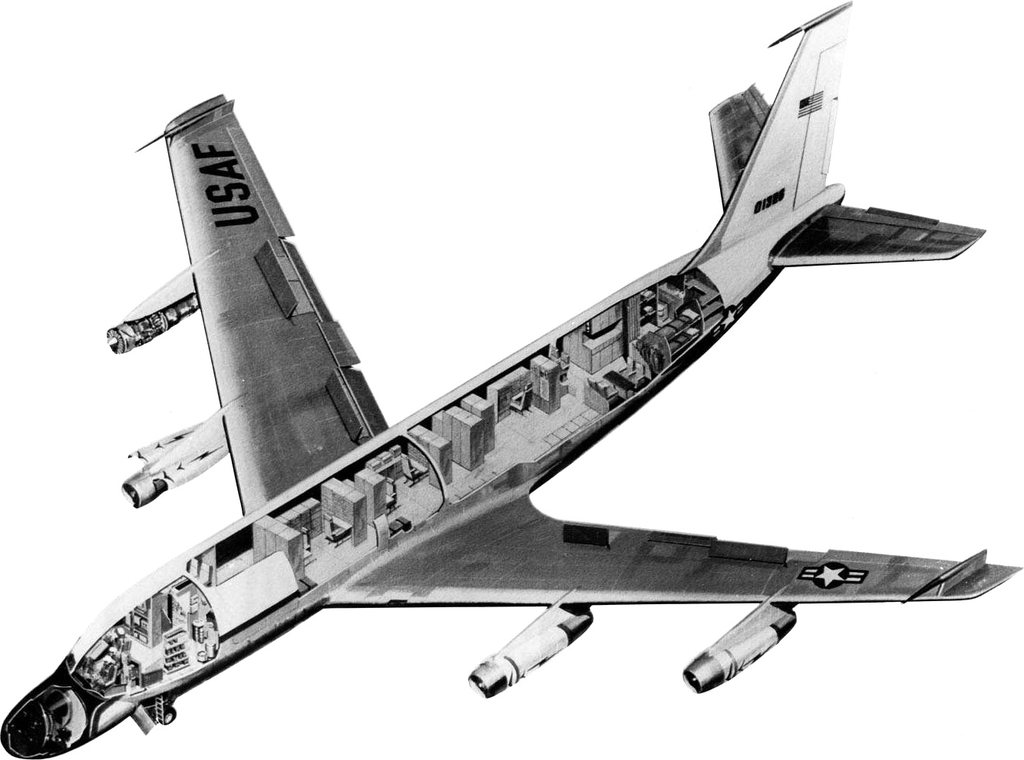
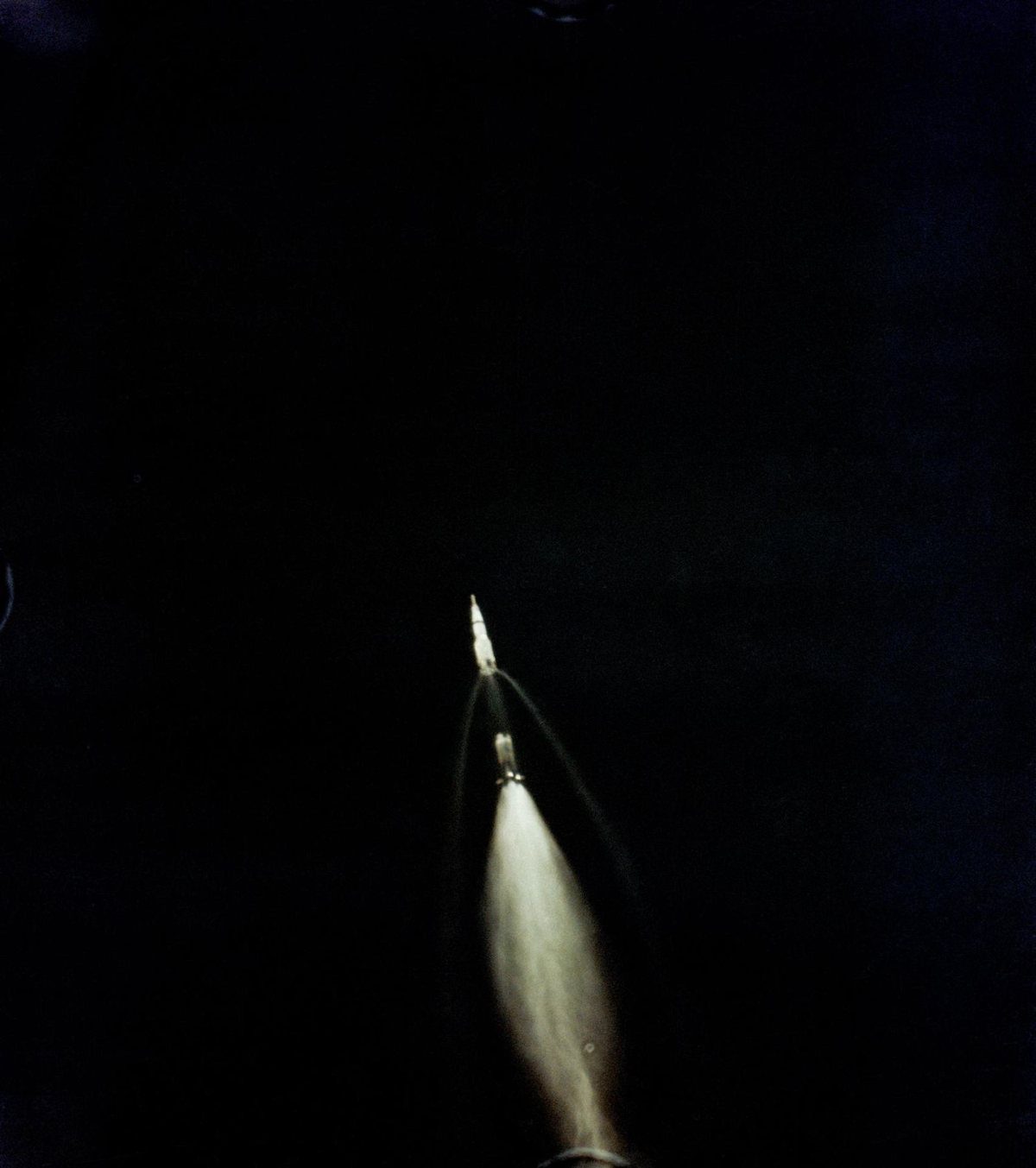
ARIA 61-0328 was one of the Apollo / Advanced Range Instrumentation Aircraft: modified Boeing C-135 jets that carried tracking antennas, receivers and recorders aloft so that space and missile tests could be followed far from fixed ground stations.
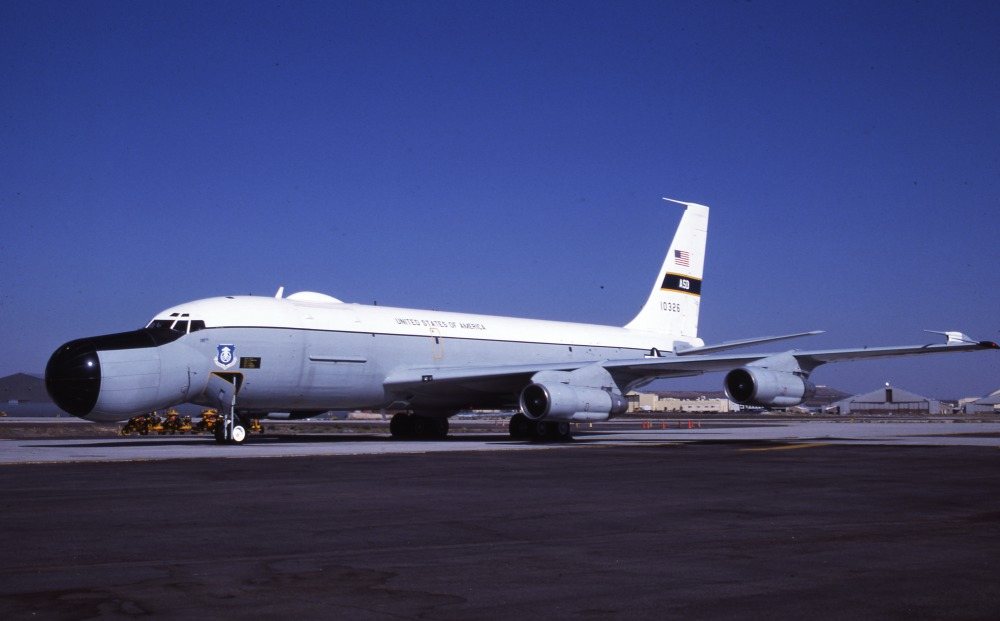
The ARIA program
The following summary is drawn from the National Museum of the United States Air Force fact sheet on the Boeing EC-135E ARIA.
- During the early 1960s, NASA and the Department of Defense needed a mobile tracking and telemetry platform to support the Apollo program and other space flight operations. In a joint project, eight Boeing C-135 Stratolifter cargo aircraft were modified into Apollo/Range Instrumentation Aircraft (A/RIA).
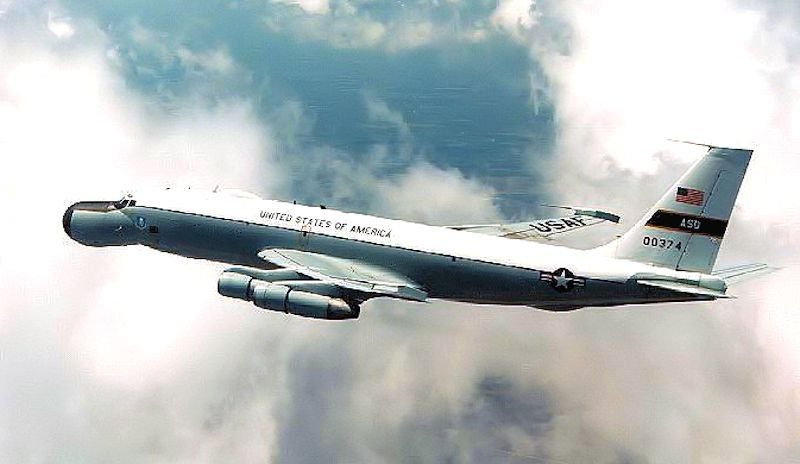
- Equipped with a steerable seven-foot antenna dish in its distinctive “Droop Snoot” or “Snoopy Nose,” the EC-135N A/RIA became operational in January 1968.
- The Air Force Eastern Test Range at Patrick Air Force Base, Florida, operated the aircraft until the end of the Apollo program, when the Air Force renamed it the Advanced Range Instrumentation Aircraft (ARIA).
- In December 1975 the fleet transferred to the 4950th Test Wing at Wright-Patterson Air Force Base, Ohio. Later conversions included re-engining that changed the EC-135N to the EC-135E.
- In 1994 the fleet moved to Edwards Air Force Base, California, as part of the 412th Test Wing.
- On November 3, 2000, the last EC-135E, serial number 60-374, was delivered to the National Museum of the United States Air Force. Over its career the ARIA supported the U.S. space program, gathered telemetry, verified international treaties and supported cruise missile and ballistic missile defense tests.
Remembering 61-0328
On that fateful early morning day of May 6, 1981, the Advanced Range Instrumentation Aircraft, ARIA 61-0328, lifted off from Wright-Patterson Air Force Base Fairborn, Ohio, on a training mission. An hour later, all 21 aboard perished in a fatal crash over a farmer's field in Walkersville, Maryland.
Later that year, placement of a bronze plaque inscribed with the names of those who perished along with the planting of 21 flowering crab apple trees took place at the National Museum of the Air Force Fairborn, Ohio, with each tree representing a crew member or passenger.
For much more on the ARIA program, its aircraft and its people, visit FlyARIA.com.